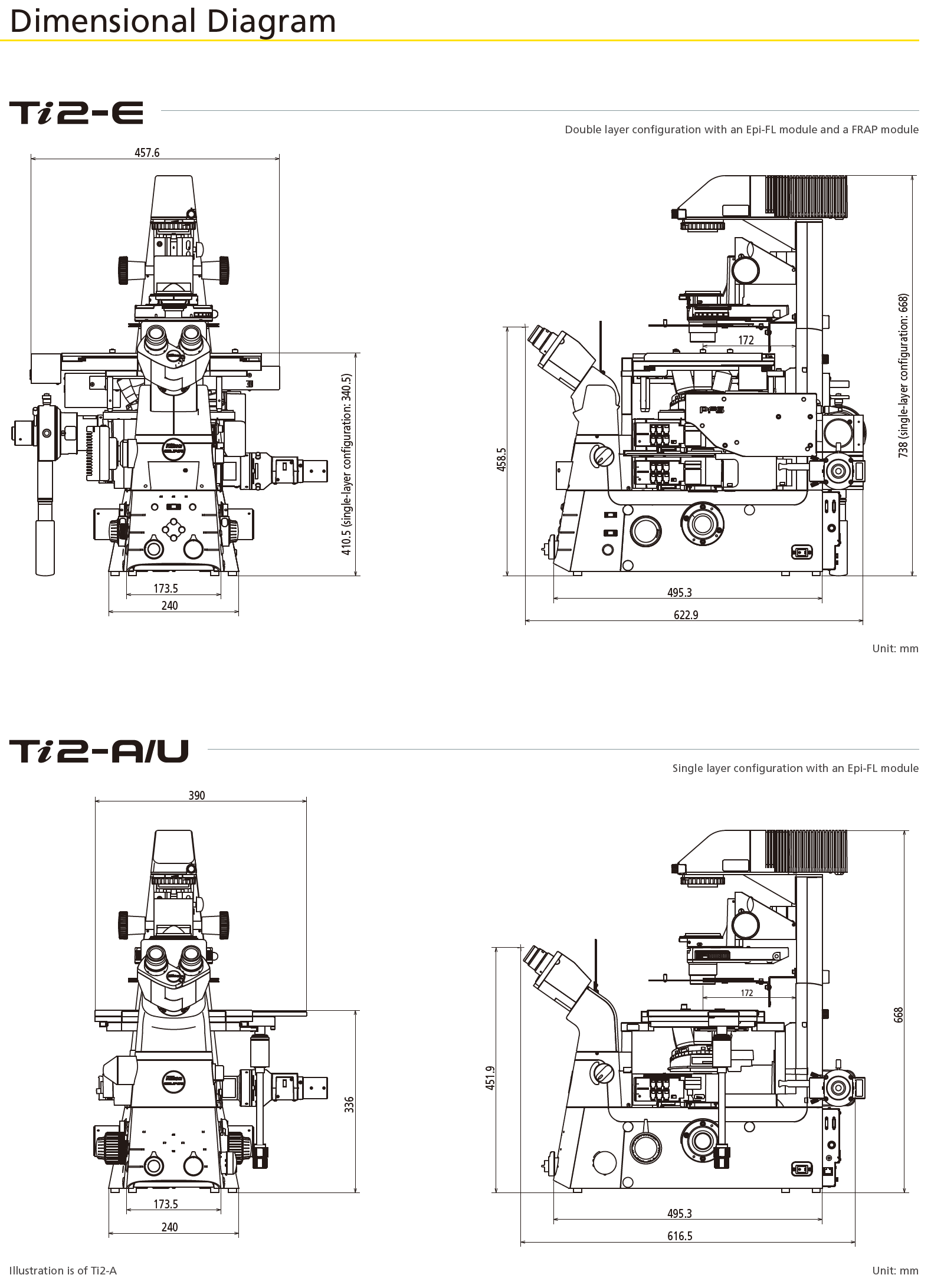
Leading platform for advanced imaging.
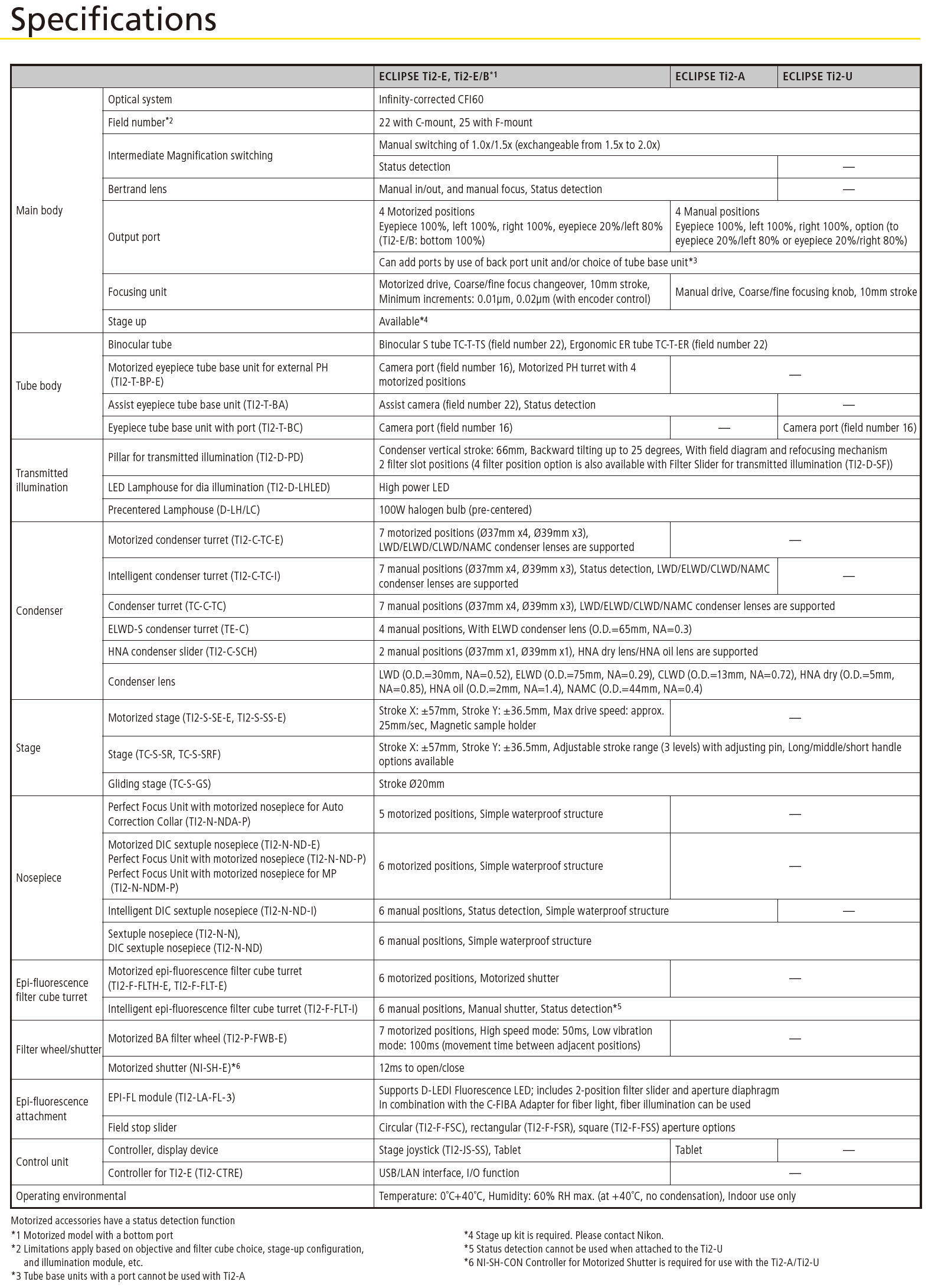
The ECLIPSE Ti2 inverted microscope delivers an unparalleled 25mm field of view (FOV) that revolutionizes the way you see. With this incredible FOV, the Ti2 maximizes the sensor area of large-format CMOS cameras without making compromises, and significantly improves data throughput. The Ti2's exceptionally stable, drift-free platform is designed to meet the demands of super-resolution imaging while its unique hardware-triggering capabilities enhance even the most challenging, high-speed imaging applications. Furthermore, the Ti2's unique, intelligent functions guide users through imaging workflows by gathering data from internal sensors, eliminating the possibility of user errors. In addition, the status of each sensor is automatically recorded during acquisition, providing quality control for imaging experiments and enhancing data reproducibility.
In combination with Nikon's powerful acquisition and analysis software, NIS-Elements, the Ti2 is a total innovation in imaging.
Basic, manual model ideal for a variety of research applications.
Groundbreaking FOV
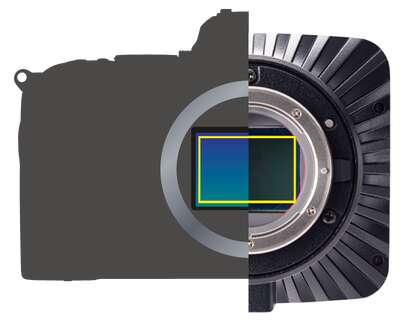
As research trends evolve towards large-scale, systems-level approaches, there is an increasing demand for faster data acquisition and higher throughput capabilities. Development of large-format camera sensors and improvements in the data processing capabilities of PCs have facilitated such research trends. The Ti2, with its unprecedented 25mm field of view, provides the next level of scalability, enabling researchers to truly maximize the utility of large-format detectors and future-proof their core imaging platform as camera technologies continue to develop at a rapid pace.
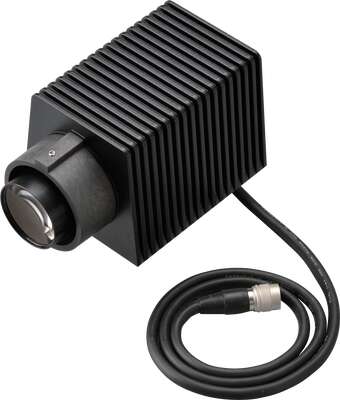 | 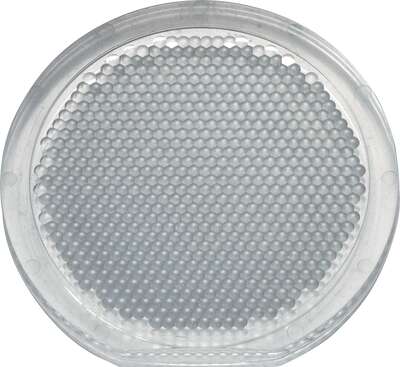 |
| High-power LED illuminator | Built-in fly-eye lens |
A compact epi-fluorescence illuminator designed for large FOV imaging is equipped with a quartz fly-eye lens and provides high transmittance across a broad spectrum, including UV. Large diameter fluorescence filters with hard coatings deliver large FOV images with a high signal-to-noise ratio.
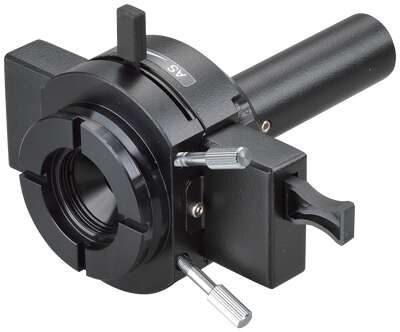 | 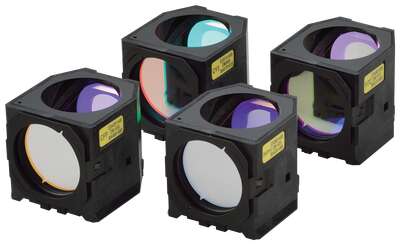 |
| Large FOV epi-fl illuminator | Large diameter fluorescence filter cubes |
Large diameter observation optics
The diameter of the observation light path has been enlarged in order to achieve a field number of 25 at the imaging port. The resulting large FOV is capable of capturing approximately double the area of conventional optics, enabling users to gain maximum performance from large-format sensors such as CMOS detectors.
 | 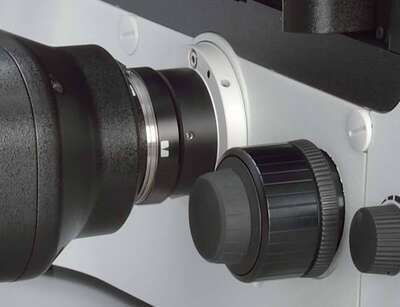 |
| Enlarged tube lens | Imaging port with large 25 field number |
Objectives for large FOV imaging
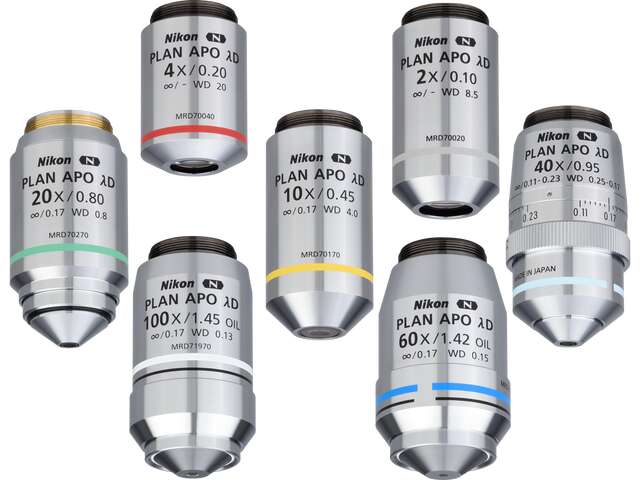
Objectives with superior image flatness ensure high quality images from edge to edge. Utilizing the maximum potential of the OFN25 objective significantly accelerates data collection.
Cameras for large-volume data acquisition
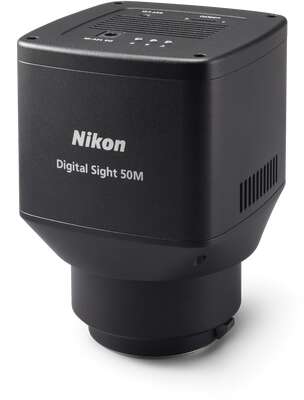
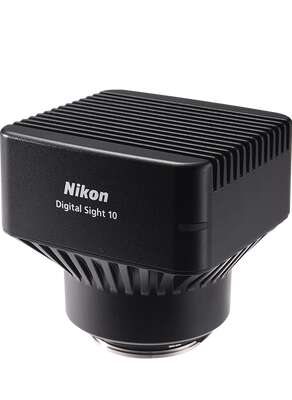
Nikon’s FX-format F-mount cameras Digital Sight 50M and Digital Sight 10 are equipped with CMOS image sensors optimized for research use, originally developed for professional D-SLR cameras. This allows high-speed and high-sensitivity live-cell imaging, enabling the best use to be made of the Ti2’s large FOV.
Unsurpassed Nikon optics
Nikon's high-precision CFI60 infinity optics, designed for use with a variety of sophisticated observation methods, are highly regarded by researchers for their superb optical performance and solid reliability.
Apodized phase contrast
Nikon's unique apodized phase contrast objectives with selective amplitude filters dramatically increase contrast and reduce halo artifacts to provide detailed high-definition images.
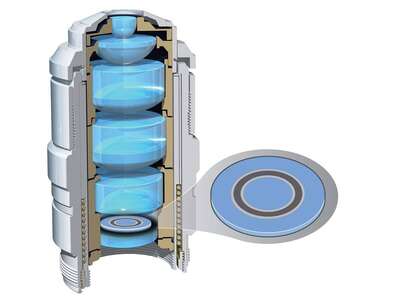 | 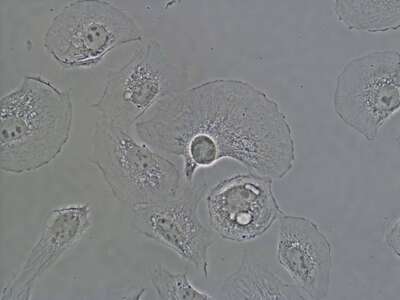 |
| Apodizedphase plate is incorporated in APC objectives | BSC-1 cells captured with CFI S Plan Fluor ELWD ADM 40XC objective |
DIC (Differential Interference Contrast)
Nikon's highly-regarded DIC optics provide uniformly clear and detailed images with high resolution and contrast throughout the magnification range. DIC prisms are individually tailored for each objective lens to provide the highest-quality DIC images for every sample.
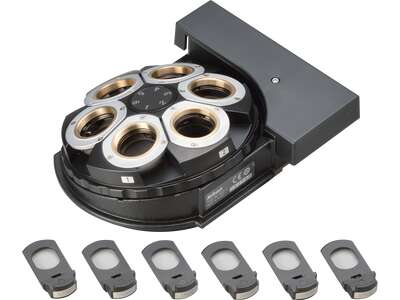 | 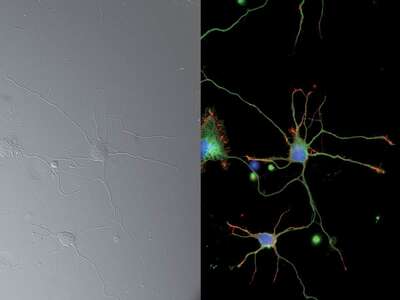 |
| DIC prisms matched to individual objectives are mounted in the nosepiece | DIC and epi-fluorescence images: 25mm FOV image of neurons (DAPI, Alexa Fluor? 488, Rhodamine-Phalloidin), captured with CFI Plan Apochromat Lambda 60XC objective and DS-Qi2 camera Photo courtesy of Josh Rappoport, Nikon Imaging Center, Northwestern Univ.; Sample courtesy of S. Kemal, B. Wang, and R. Vassar, Northwestern Univ. |
NAMC (Nikon Advanced Modulation Contrast)
This is a plastic-compatible, high-contrast imaging technique for unstained, transparent samples such as oocytes. NAMC provides pseudo-three-dimensional images with a shadow-cast appearance. The direction of contrast can be easily adjusted for each sample.
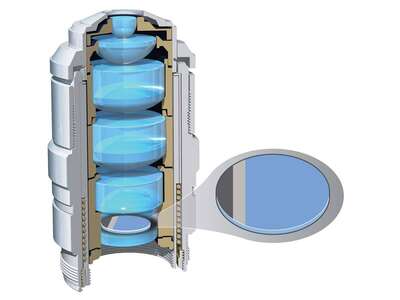 | 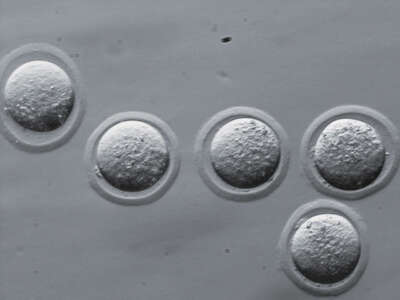 |
| NAMC objective lenses contain rotatable modulators | Mouse embryos, captured with CFI S Plan Fluor ELWD NAMC 20XC objective
|
Epi-fluorescence
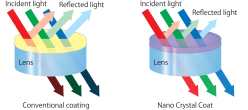
The Lambda series objectives, utilizing Nikon's proprietary Nano Crystal Coat technology, are perfect for demanding, low-signal, multi-channel fluorescence imaging that requires high transmission and aberration correction over a wide wavelength range. Combined with new fluorescence filter cubes that offer improved fluorescence detection and stray light countermeasures such as the Noise Terminator, the Lambda series objectives demonstrate their power in weak signal observations such as single-molecule imaging and even luminescence-based applications.
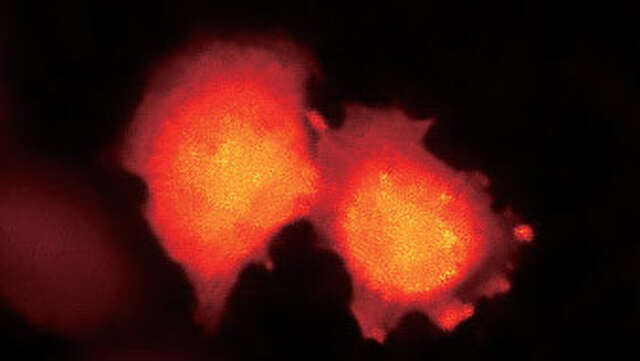 |  |
Luminescence image: HeLa cells expressing BRET-based calcium indicator protein, Nano-lantern (Ca2+). Sample courtesy of Prof. Takeharu Nagai, The Institute of Scientific and Industrial Research, Osaka University |
|
Focus perfected
Even the slightest change in temperature and vibrations in the imaging environment can greatly impact focus stability. The Ti2 eliminates focus drift using both static and dynamic measures to enable faithful visualization of the nanoscopicand microscopic world during long time-lapse experiments.
The detector portion of the Perfect Focus System (PFS) has been detached from the nosepiece in order to reduce mechanical load on the objective nosepiece. This new design also minimizes heat transfer, which contributes to a more stable imaging environment. Towards this end, the power consumption of the Z-drive motor has also been reduced. Combined, these mechanical redesigns result in an ultra-stable imaging platform, perfectly suited for single-molecule imaging and super-resolution applications.
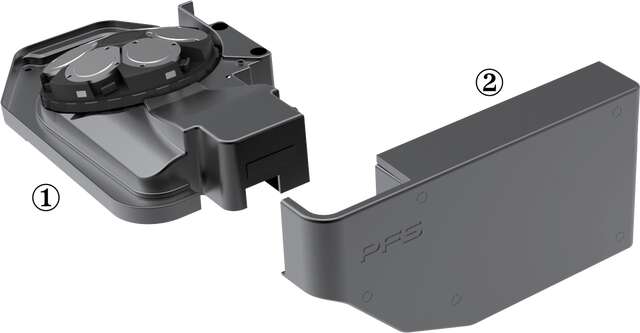 |
| High stability Z-focusing mechanism remains adjacent to the nosepiece even in expanded configurations. ① PFS nosepiece ② PFS Measuring Unit |
Assist Guide
It is no longer necessary to memorize complex microscope alignment and operation procedures. The Ti2 integrates data from sensors to guide you through these steps, eliminating user error and enabling researchers to concentrate on their data.
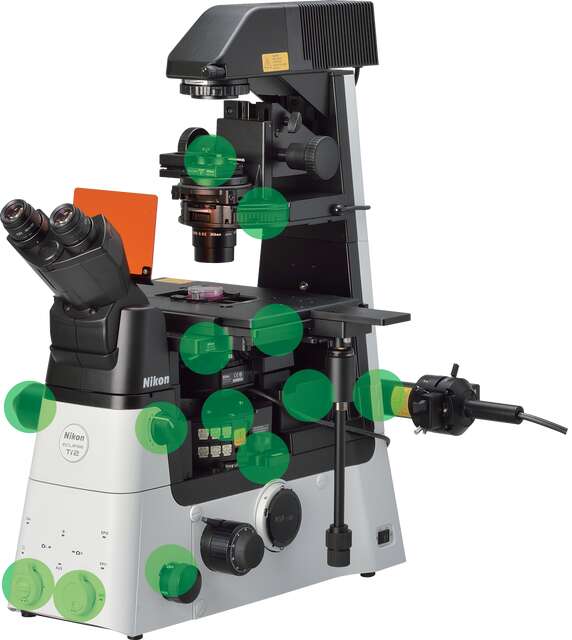
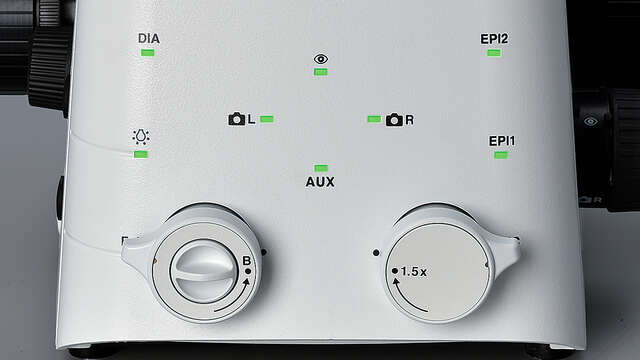
Microscope status can be viewed on a tablet and also determined based on status lights on the front of the microscope, enabling status determination in a dark room.




我們.jpg "Support")

.png)